Duke AERO
Back to portfolio
Aerospace Systems
Rocketry Systems
Avionics, air-brake, payload, guided recovery, and simulation work across student aerospace systems and launch operations.
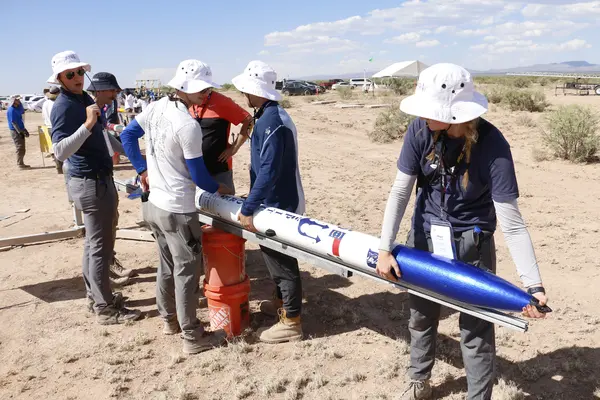
Avionics, air brakes, simulation, payload and recovery interfaces
High-powered student launch vehicles
Requirements, integration, testing, and field reliability
Highlights
Worked across subsystems where mechanical, electrical, and software constraints had to line up before launch.
Built engineering judgment around integration: packaging, accessibility, test procedures, wiring, and launch-day serviceability.
Connected analysis and simulation work to physical hardware decisions on student aerospace vehicles.
Student aerospace hardware
System Context
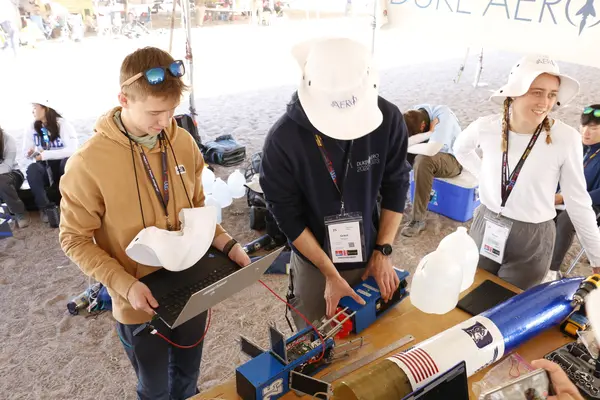
My rocketry work has centered on student-built aerospace systems that combine avionics, structures, simulation, integration, and flight operations. Across Duke AERO projects, I worked on avionics, air brakes, and simulation systems for high-powered rockets.
This kind of work requires system-level thinking because a rocket is not a collection of isolated parts. A decision in the airframe can affect wiring paths, sensor placement, recovery volume, structural margins, and launch operations.
Where the engineering converges
Subsystem Work
- Avionics and embedded electronics for sensing, telemetry, and data collection.
- Variable-drag air-brake concepts used for apogee targeting and flight control studies.
- Simulation workflows for estimating performance before committing to hardware.
- Integration work that connects structures, payloads, electronics, recovery hardware, and operational procedures.
From model to launch rail
Design Process
The practical challenge is moving from a clean model to a flight article that can survive handling, transport, arming, launch loads, and recovery. That means each subsystem has to be designed for access, assembly, testing, and inspection.
A useful aerospace design is one that can be checked. I treated requirements, test plans, and integration constraints as design inputs, not documentation after the fact. That approach helped connect simulation results and hardware decisions to real launch-day conditions.
Why rocketry is a strong testbed
Lessons
Rocketry is unforgiving in a way that makes it valuable: CAD, analysis, manufacturing, wiring, software, and operations all converge into one flight article. The work taught me to think through interfaces early and to validate assumptions with tests wherever possible.
The most important lesson was that aerospace engineering quality depends on disciplined integration. A clever subsystem only matters if it works with the rest of the vehicle, can be verified, and can be operated reliably by the team under time pressure.